December 2026 Diversity Calendar gathers selected cultural, religious, and international observances for people planning a US classroom, library, or workplace schedule. Hanukkah begins at sunset on December 4, Human Rights Day falls on December 10, and Kwanzaa starts on December 26. Each entry describes an occasion. The people you work with can tell you which dates affect their availability and how they want an event described.
For a separate page to collect your group’s confirmed event times, use the December 2026 Calendar collection.
December 2026 Diversity Calendar: Monthly Observances
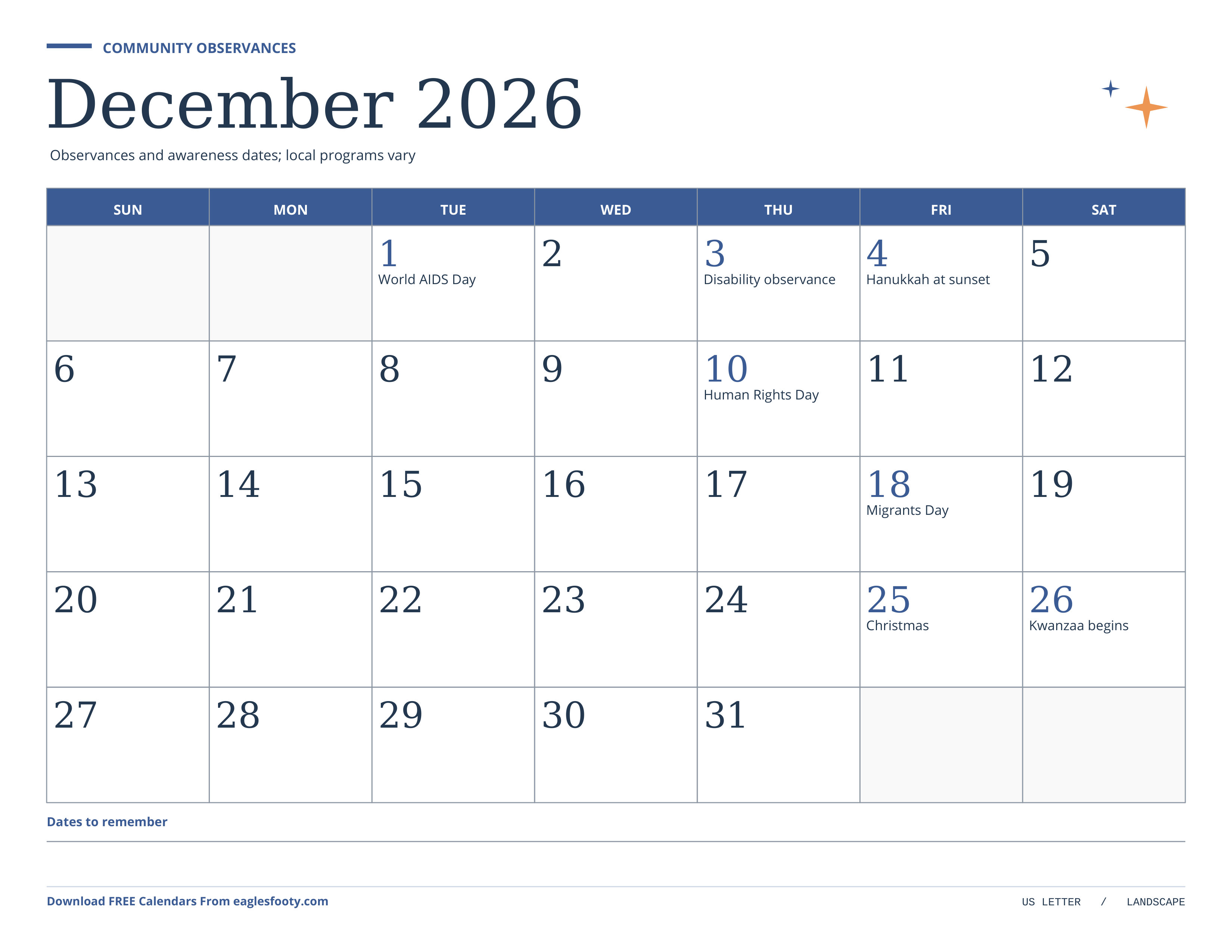
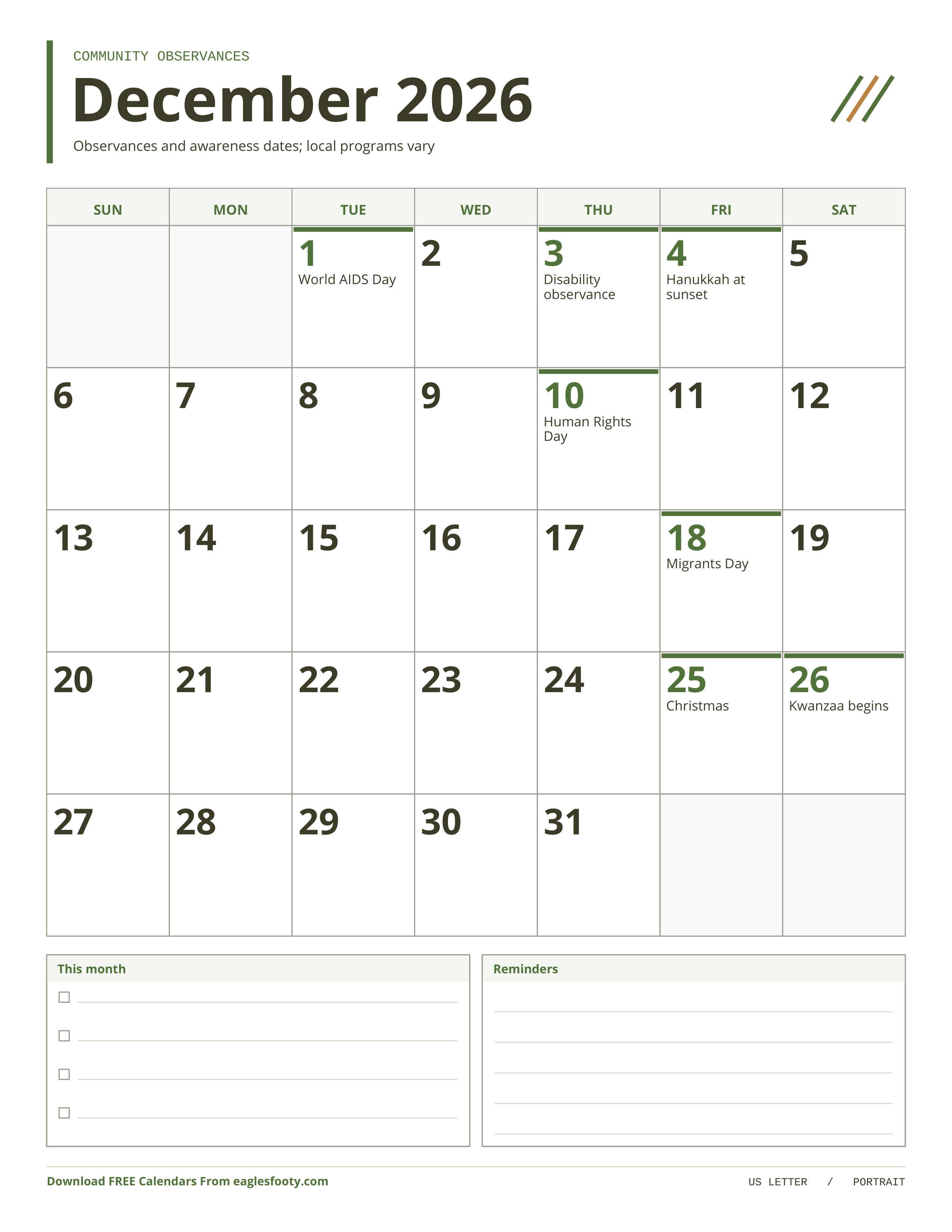
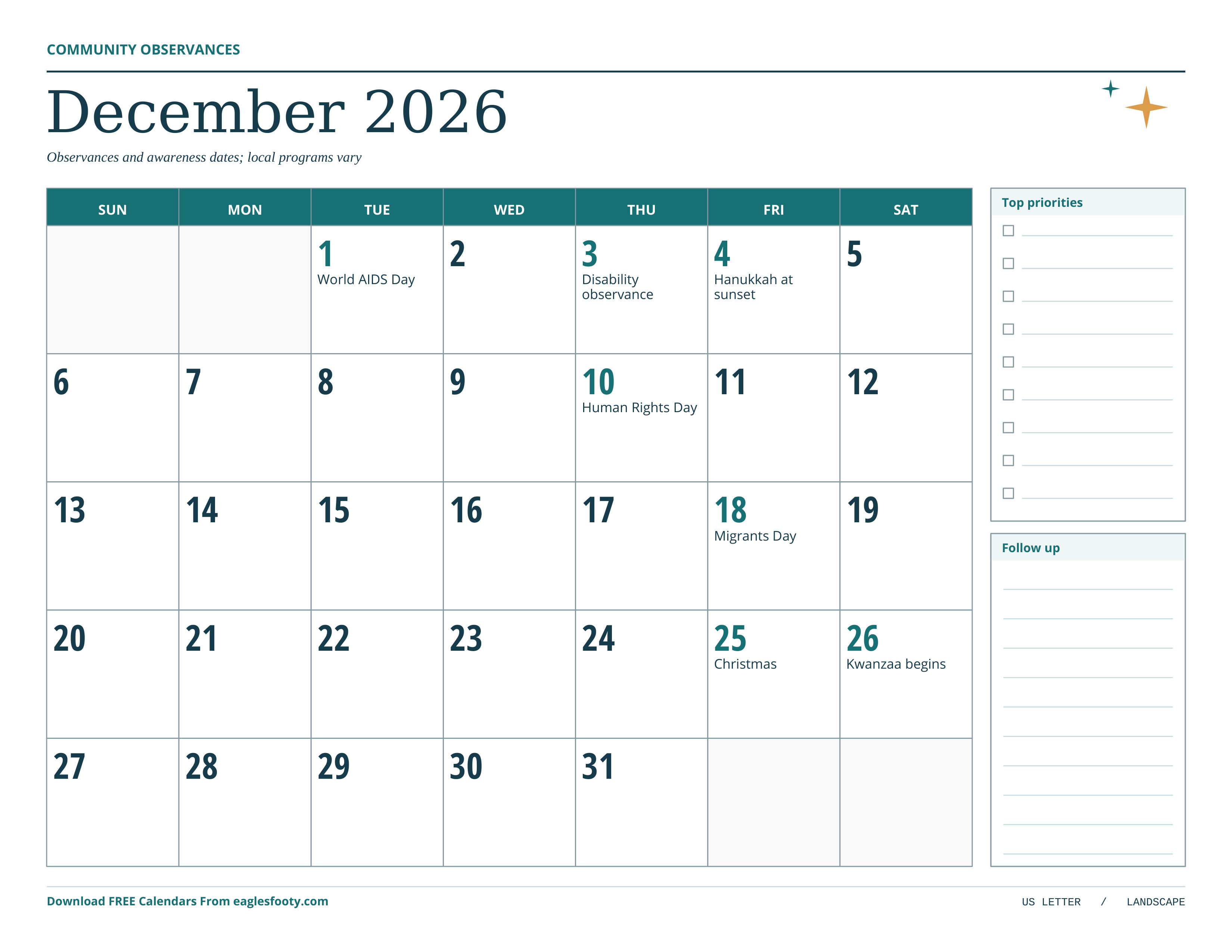
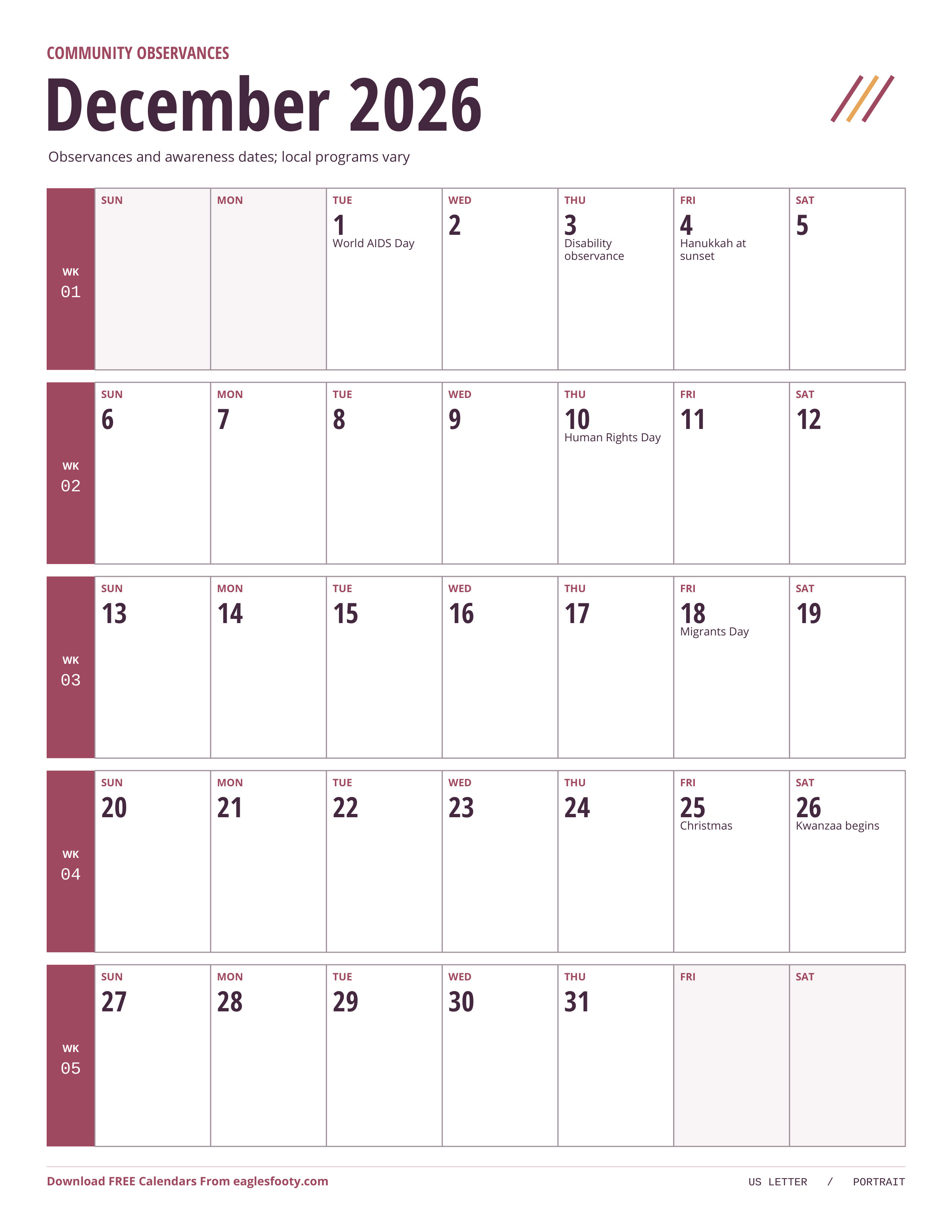
December 2026 Diversity Calendar for Community Events
A useful calendar can answer three different questions. What does this date commemorate? Is a local organization offering a program? Will the people invited be available? Those questions need separate entries. The United Nations can confirm the date of Human Rights Day. Your public library supplies the hours of its exhibit. Only the invited speaker can confirm when they can join. Keep those pieces separate while you plan.
| Date or Date Range | Observance | Example of an Appropriate Calendar Note |
|---|---|---|
| Tuesday, December 1 | World AIDS Day | Link to a named community event and verify its hours with the host. |
| Thursday, December 3 | International Day of Persons with Disabilities | Include accessibility details for the advertised program. |
| Sunset Friday, December 4, through nightfall Saturday, December 12 | Hanukkah | Show the evening start when inviting families to an event. |
| Thursday, December 10 | Human Rights Day | Identify the topic and presenter instead of listing only the day’s name. |
| Friday, December 18 | International Migrants Day | Give participants a way to contribute without sharing personal histories. |
| Friday, December 25 | Christmas Day | Check the building schedule before advertising an in-person program. |
| Saturday, December 26, through Friday, January 1 | Kwanzaa | Continue the entry onto January so the final day remains visible. |
Placing Hanukkah on a Civil Calendar
Put a short entry for sundown on Friday, December 4. The first full daytime date of Hanukkah is Saturday, December 5, and the holiday ends after nightfall on Saturday, December 12. If your group is offering an evening event, write its city and actual time alongside the holiday span. Someone looking only at the first daytime date could otherwise miss an opening-night gathering by an entire day.
Watch for a different month-boundary issue with Kwanzaa. Its seven days extend from December 26 through January 1 each year. Leaving the last box at December 31 makes a December-only display appear to shorten the celebration. A note saying “continues January 1” solves that problem even when you have room to post only one month. The Smithsonian’s National Museum of African American History and Culture offers background on the principles associated with the celebration.
Planning an Invitation People Can Act On
- Check the date against a source associated with the observance.
- Ask the local host for the program title, venue, access arrangements, and time zone.
- Write a short invitation identifying who can attend and whether registration is needed.
- Share a contact route for corrections and update both printed and digital calendars if the host changes anything.
Consider a library holding a discussion on Thursday, December 10. The poster can name Human Rights Day and give the title of the book under discussion. A reader also needs to know whether the library provides copies, how to register for captions, and if the discussion will be recorded. Those details make the date useful without asking visitors to disclose anything about their identity or reason for attending.
Reviewing a Calendar With a Small Team
Before sharing a December 2026 diversity calendar, ask one reader unfamiliar with the venue to find the event time and entrance. Their questions reveal details regular attendees may overlook.
- Ask contributors for the wording they prefer for their own program.
- Check public contact information before posting a copy that visitors can photograph.
- Give online participants the time zone and an accessible text version of the schedule.
- Make participation optional when an activity invites people to share personal experiences.
For a school display, give students a way to suggest an occasion that matters to them or their families. An unsigned suggestion box can work better than asking a child to explain an entire tradition in front of a class. A teacher can verify the date, ask whether someone wants to help with the description, and add an entry that is both accurate and relevant to that particular school.
Leaving Room for the People Who Use the Page
A diversity calendar is selective. Community members may follow religious calendars or local traditions with important dates outside this list. Leave an area for a local organization’s name, the date it confirms, and the person who can answer questions. This matters particularly for programs that share a holiday name but target different audiences, such as a public museum exhibit and a private faith-community service.
Before posting the final sheet, read it in grayscale and check the order in which a visitor would encounter the information. A holiday name, day, and contact route should make sense even when the reader cannot distinguish highlights. Keep a text copy beside the print for anyone using a screen reader. Verify named international dates against the United Nations observances list, the Hanukkah dates against Hebcal’s Diaspora calendar, and the seven-day Kwanzaa span against the Smithsonian’s Kwanzaa resource.